Painting Your Art Out Journal
From Paintbrushes to Possibilities: How Creativity Can Shape a Child's Future
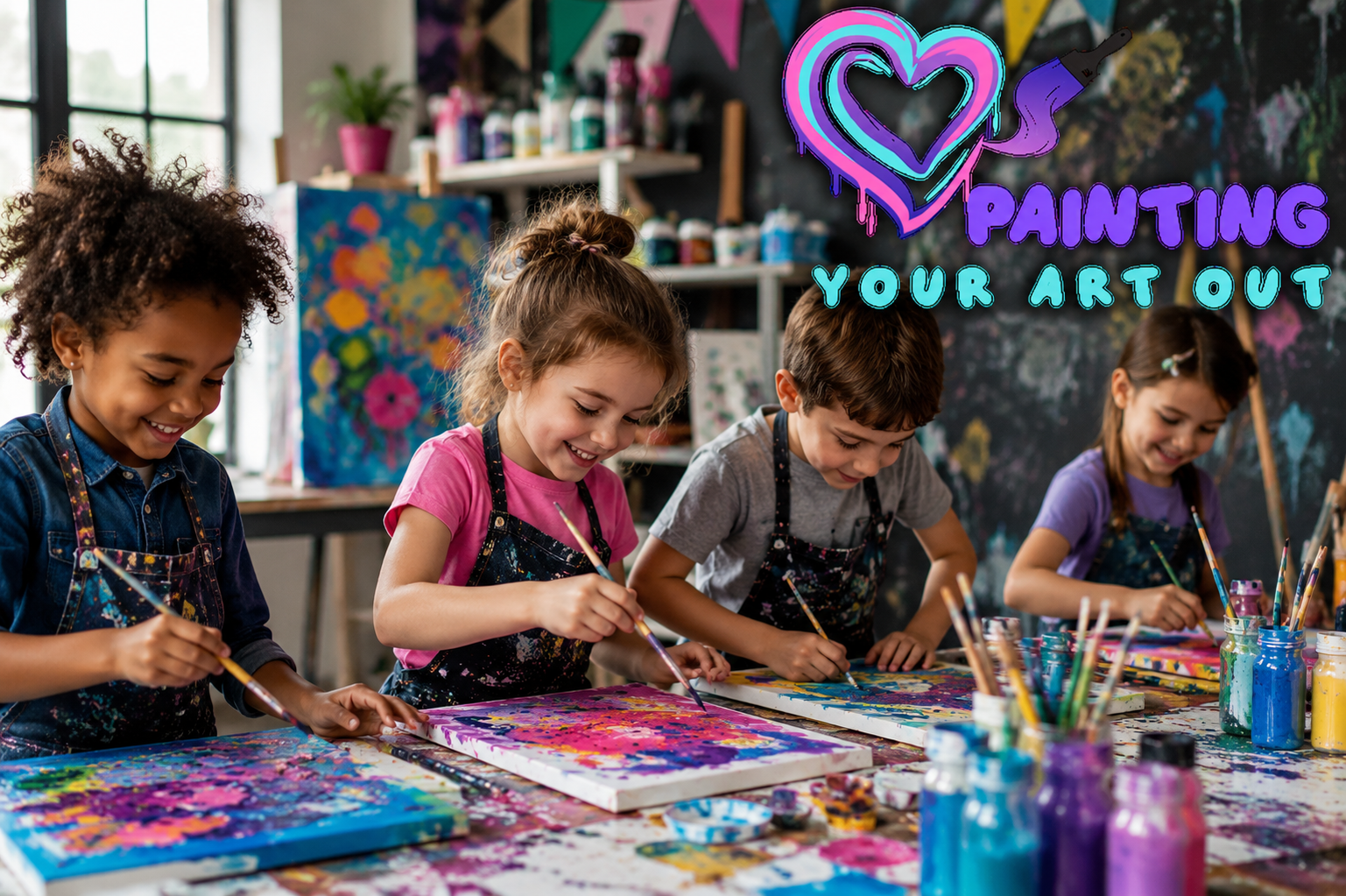
When a child picks up a paintbrush, they're probably thinking about colors. Should the sky be blue or purple? How do I make this flower look the way I imagined it? What they're not thinking about is their future career.
That's okay. Children don't need to know what they want to be when they grow up. They need chances to explore, experiment and discover what excites them.
A Paintbrush Can Be the Beginning of Something Bigger
When children paint, they're making decisions, not following a script. Which colors? Where do the flowers go? What happens if I mix these two together?
The National Endowment for the Arts has found that arts participation in childhood and adolescence is associated with positive social-emotional and academic outcomes. A painting activity won't determine what a child becomes, but it can help them discover what they enjoy and how they like to solve problems.
Creativity Doesn't Mean Becoming an Artist
Creativity matters far beyond the art studio. During a simple painting activity, a child imagines a finished picture, experiments with color, pays attention to detail and tries again when something goes sideways.
Those skills don't disappear when the paint dries. They show up in school, hobbies, relationships and eventually the workplace.
Where Could Creativity Lead?
Maybe the child who loves painting becomes a painter. Or maybe they become:
An architect or interior designer who can picture a space before it exists
A graphic designer, illustrator or animator who brings ideas and characters to life
A video game or UX designer who blends storytelling, visuals and technology
A fashion, jewelry or product designer who shapes things people use every day
A photographer, advertising creative or brand designer who communicates through visuals
A film production, costume or set designer who builds the look of a story
An engineer or teacher who approaches problems from a different angle
What to Do When Things Don't Go as Planned
This may be the most valuable lesson of all. The line isn't quite right. The color looks different than expected. A brushstroke goes somewhere it shouldn't.
The child can decide the painting is ruined, or figure out what to do next. They can paint over it, change a color, add something new or realize the original idea wasn't the right one. That's creative problem-solving, and it belongs in every career.
Let Children Explore First
We often ask kids, "What do you want to be when you grow up?" Maybe a better question is, "What do you love creating?"
A child who loves drawing, building, designing or inventing stories is showing us what captures their attention. Those interests will change many times, and that's part of growing up. The goal isn't to choose a career at age six, eight or twelve. It's to give them enough opportunities to discover themselves.
Why We Love Kids' Painting Parties
At Painting Your Art Out, we believe a kids' painting party should be more than putting a canvas in front of a child and telling them what to paint. It's a chance to make choices, watch an idea become something real and proudly say, "I made that." Our guided kids' painting parties let children explore their creativity while creating something to take home.
And for families who want to keep creating together, our Family Art Kits bring the same experience to your kitchen table. No matching artistic ability required.
Give Their Imagination Room to Grow
Today's little painting may not become tomorrow's career. But the confidence to create, imagine, experiment and solve problems can follow a child anywhere.
We bring creative painting experiences to birthday parties, school activities, family gatherings and group events across Greater Houston, including League City, Friendswood, Pearland and Clear Lake.
Give them a canvas, some color and the freedom to see what they can create.
Ready to plan one? Browse our upcoming events or get in touch to book a party for your child.
Written by Pauline Thomas with first-hand expertise. AI tools may be used for research and drafting assistance, but all content is reviewed, verified, and published by the author.